
The main benefits of toll manufacturing are access to production capability without building your own line, continued control of your recipe and material relationships, and a separately scoped manufacturing cost. The value depends on how ready your formula and supply chain are.
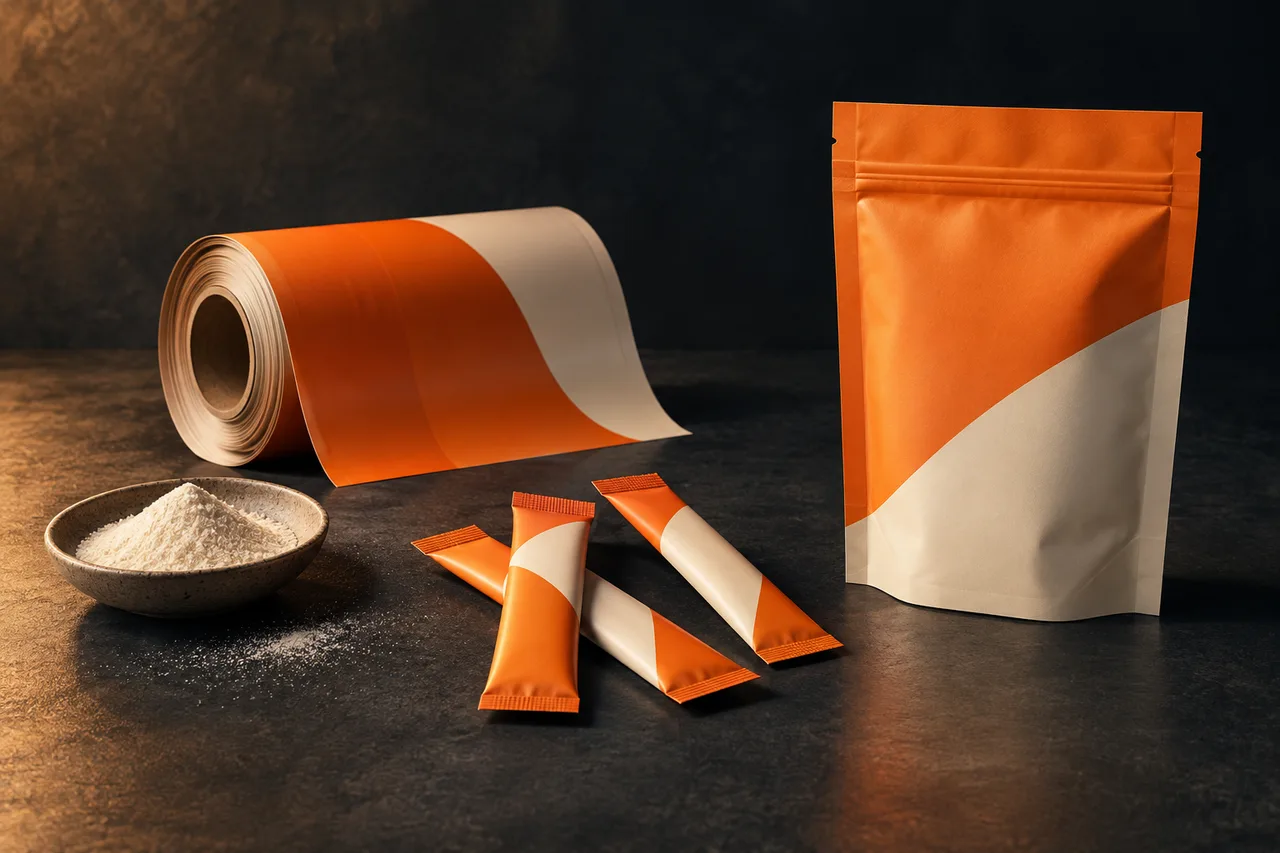
You do not have to build the filling operation.
A stick pack is more than a serving of powder. Film has to form, fill and seal consistently. Finished units need an agreed packout. Bringing that work to an established production operation can avoid building those functions yourself.
That does not mean every formula is immediately ready to run. Compatibility, specifications and material readiness still matter. The benefit is access to a production process—not an exemption from preparation.
Your component choices can remain yours.
If you already have a blend partner, specialty ingredient source or established packaging supplier, tolling may let you preserve those relationships. You can compare the production service independently of a completely sourced product.
Confirm suitability before purchasing material. The film you like visually may not fit the equipment or product. A supplier’s ingredient name may not specify the exact grade your formula needs. Keeping control also means keeping those details organized.
A separated price can make decisions clearer.
When manufacturing, materials and development are distinct, you can see which changes move the budget. Increasing fill weight affects a different part of the model from adding a retail carton or developing another flavor.
For example, adding a second SKU does not mean doubling the total order quantity in our calculator. You enter the combined sticks, then the extra SKU fee appears separately. That makes the scope easier to discuss.
You can compare run sizes before committing.
Per-stick economics often improve at larger quantities, but the full cash commitment includes more ingredients, packaging and inventory. A lower unit cost is not a reason by itself to order more than you can sell.
Use a run-size comparison alongside your sales plan. Check total cash, likely sell-through and the number of retail units produced. Your next reorder should be part of the discussion too.
Make sure the advantages match your situation.
A brand with a finished blend and organized component suppliers may benefit differently from a founder who needs a recipe, flavor system and sourcing plan. Both can be workable projects; they need different services.
Start by describing what is ready. We can scope manufacturing around that and identify the work still needed. It is more practical than forcing every product into the same package.
Your quick readiness check.
Use this to spot the gaps before your next conversation. Your selections stay on this page.
0 of 3 checked. Unknowns are fine. Bring them to the conversation.