
Formulation develops or changes a recipe. Powder analysis evaluates a customer-supplied blend for the agreed production questions and includes blank-stick samples. Laboratory testing measures specific attributes through an agreed test panel. One service does not automatically include the others.
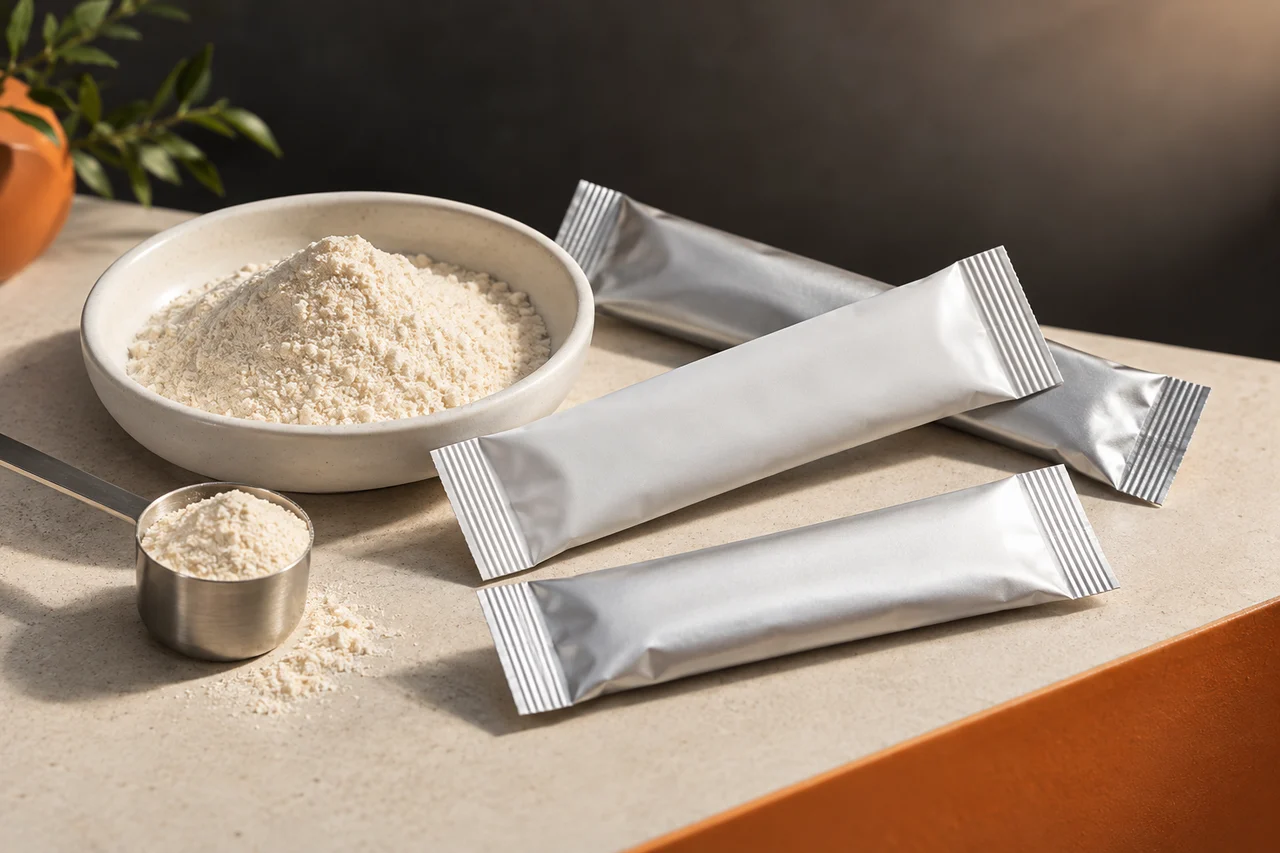
Formulation: build the product.
This is the route when the recipe, flavor system or finished serving still needs work. A product brief, target experience, ingredients and constraints guide that development.
Custom formulation is $3,500 per formula/flavor for one agreed scope, paid 100% upfront after scope confirmation. The process generally takes 6–8 weeks once payment, the brief and required materials are ready; complex blends, materials and feedback can take longer. It includes physical taste samples, up to six sample-and-feedback rounds within scope, and the completed formula and supporting bench documentation. You own the completed formula; third-party ingredient technology rights are separate. Another manufacturing SKU’s $400 fee does not include another formulation.
Powder analysis: evaluate a supplied blend.
This service starts with material supplied for evaluation. It can help address powder behavior and blank-stick sampling before a production commitment. Its value is in the agreed questions being evaluated, not in calling every sample “validated.”
The $750 website option covers one evaluation round and preproduction samples for one supplied blend. If StickPax is sourcing production ingredients, analysis is not automatically included. You can still request it, but you must supply the blend or ingredients for the analysis.
Laboratory testing: define the actual panel.
“Testing included” is too broad to be useful. Microbiological, identity, potency, heavy-metal and stability questions involve different tests and purposes. The required work depends on the product and the responsible quality review.
Our powder-analysis option is not a laboratory testing panel, proof of shelf life or a certification. Additional testing needs a defined scope and separate quote. Do not use a successful blank-stick sample as evidence for claims it was not designed to test.
Write down the intended preparation conditions.
Hot coffee, cold water and a shaker bottle are different use cases. If mixing behavior matters to your product, state the liquid, temperature, serving and preparation instructions you want evaluated.
Words such as “clear,” “instant” or “tasteless” are goals to assess, not outcomes we can promise from an ingredient list. A sample review should compare against the actual target experience.
Ask for the smallest useful next step.
If you need a recipe, discuss formulation. If you have a blend and want a production-oriented evaluation, discuss powder analysis. If you need a specific test result, name the test question.
You may need more than one of these services. Separating them makes the estimate clearer and makes it easier to decide what should happen first.
Your quick readiness check.
Use this to spot the gaps before your next conversation. Your selections stay on this page.
0 of 3 checked. Unknowns are fine. Bring them to the conversation.